Casino Royale 1967 Canon
Ian Fleming's spy made his debut in the 1953 novel 'Casino Royale,' and appeared in 14 novels and short story collections written by the former newspaper editor who had served in naval. But since Casino Royale is own by someone else, it was considered 'non-canon' by EON production. (at least until Sony bought out everyone involved and now we have the 2006 version of Casino Royale) The backstory behind Never Say Never Again (1983) is also a bunch of legal mess. There’s a reason why I’ve never seen anyone campaigning for the 1967 version of Casino Royale to be included in the James Bond film canon and I absolutely can’t blame anyone for thinking that this.
© Provided by GamesRadar nullNo Time to Die is out in April and, if you start now, you'll be able to get a complete rewatch of the entire James Bond series in before Daniel Craig's swan song in 2021. But which ones should you watch? Which ones aren't canon? And what if you only want to dabble in certain Bond actors, while leaving out others entirely?
Thankfully, we've compiled a list to ease all of your worries. Below, we've got all 24 current James Bond movies in order of release, should you want to start from Dr. No and work your way through the series. Then, we break things down by Bond actor: Connery, Lazenby, Moore, Dalton, Brosnan, and Craig all feature at the swaggering 00-agent, should you want to cherrypick their finest globetrotting, world-saving adventures. Then, there's a last look at the Bond movies that aren't canon for all the completionists out there. For Your Eyes Only, of course.
Casino Royale 1967 Canon
Every James Bond movie in order
Here’s the current order to watch Bond movies by release date. Starting in 1962 with Dr. No and ending (for now) with 2015’s Spectre.
- Dr. No (1962)
- From Russia With Love (1963)
- Goldfinger (1964)
- Thunderball (1965)
- You Only Live Twice (1967)
- On Her Majesty’s Secret Service (1969)
- Diamonds Are Forever (1971)
- Live and Let Die (1973)
- The Man with the Golden Gun (1974)
- The Spy Who Loved Me (1977)
- Moonraker (1979)
- For Your Eyes Only (1981)
- Octopussy (1983)
- A View to a Kill (1985)
- The Living Daylights (1987)
- License to Kill (1989)
- GoldenEye (1995)
- Tomorrow Never Dies (1997)
- The World is Not Enough (1999)
- Die Another Day (2002)
- Casino Royale (2006)
- Quantum of Solace (2008)
- Skyfall (2012)
- Spectre (2015)
But that’s not the only way to watch James Bond movies in order. Debates have raged over the best actor who has donned the tuxedo over the years. Connery. Lazenby. Moore. Dalton. Brosnan. Craig. You’re probably thinking of your choice right now. Let’s divide them up so, if you wish, you can dive straight into the oeuvre of your favourite 007 – starting with Sean Connery and his one unique entry that you won’t find in the list above. Intrigued?
Sean Connery's James Bond movies
Out of all the actors to portray Bond, Sean Connery has (by far) the strangest run with the character. Having originated the on-screen movie role of 007, he starred in the first five Bond movies, departed from the role (and replaced by George Lazenby), before returning for the seventh, Diamonds Are Forever in 1971. He’d later go on to play James Bond again in the non-canon entry Never Say Never Again, a remake of 1965’s Thunderball. It’s not part of the main franchise, so you can ignore it if you wish, though we’ve kept it here for completion’s sake.
- Dr. No (1962)
- From Russia With Love (1963)
- Goldfinger (1964)
- Thunderball (1965)
- You Only Live Twice (1967)
- Diamonds Are Forever (1971)
- Never Say Never Again (1983)
George Lazenby's James Bond movies
Just the one man for our man Lazenby. He did help kickstart the prevalent fan theory that every James Bond is a different person, though. Sure, it’d later be retconned – but it was a nice wink and a nod from the new 007 in his very first scene.
- On Her Majesty’s Secret Service (1969)
Roger Moore's James Bond movies
The most prolific Bond actor, Roger Moore played the character in seven movies across 12 years. His flicks are best known for heavily increasing the camp factor – and introducing a variety of several increasingly silly gadgets (crocodile submarine anyone?), which would fast become a staple of the franchise.
- Live and Let Die (1973)
- The Man with the Golden Gun (1974)
- The Spy Who Loved Me (1977)
- Moonraker (1979)
- For Your Eyes Only (1981)
- Octopussy (1983)
- A View to a Kill (1985)
Timothy Dalton's James Bond movies
Cards on the table. Dalton is low-key one of our favourite Bonds. If you’re eager for a grittier, proto-Craig version of 007 then you could do a lot worse than seeking out Dalton’s two entries as the secret agent.
- The Living Daylights (1987)
- License to Kill (1989)
Pierce Brosnan's James Bond movies
Brosnan picked up where Dalton left off after a six-year hiatus – to date, the longest gap between Bond movies.
- GoldenEye (1995)
- Tomorrow Never Dies (1997)
- The World is Not Enough (1999)
- Die Another Day (2002)
Daniel Craig's James Bond movies
Daniel Craig’s Bond films more or less follow on from each other so should be watched in order. A fifth movie, No Time to Die, is set for release in April.
- Casino Royale (2006)
- Quantum of Solace (2008)
- Skyfall (2012)
- Spectre (2015)
Non-canon James Bond movies
As you may have already noticed, there’s one Sean Connery Bond film that isn’t counted as part of the mainline canon. For reasons too head-scratching to go into here (mostly involving licensing issues and years-long legal fights), there are two films that star James Bond but aren’t considered canon.
When considering the correct order of James Bond movies, that’s important – they don’t technically count, but are still an extra slice of 007, should you so wish it. The first is Casino Royale (no, not that one) from 1967, starring David Niven as James Bond. The second is the Thunderball remake Never Say Never Again, featuring Sean Connery in his seventh spin as Bond.
- Casino Royale (1967)
- Never Say Never Again (1983)
Check out our other watch order explainers, including:
--
How to watch the Marvel movies in order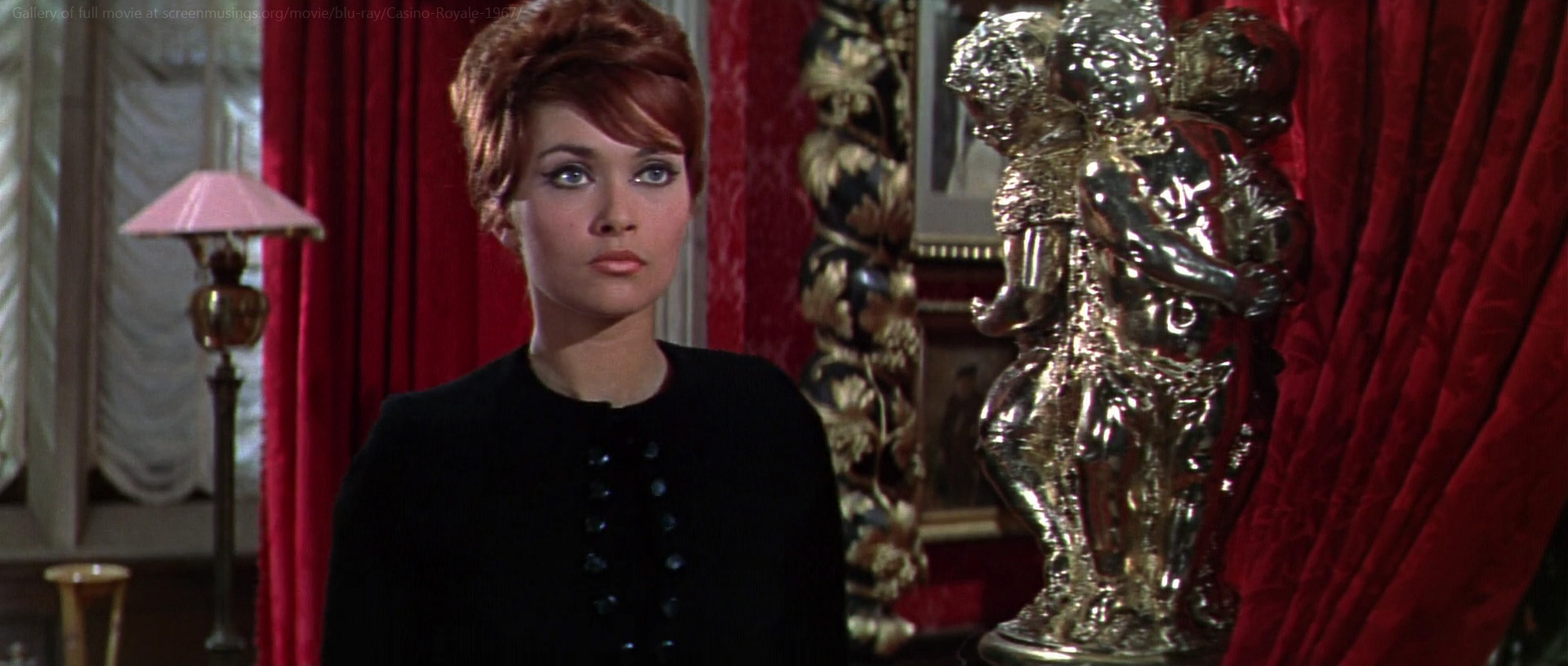 -- How to watch the Star Wars movies in order
Spoiler alert! This review gives away the identity of the main villain. (Not that it really matters. I never knew what was going on anyways.)
Casino Royale 1967 Canon Mark Iii
1967’s Casino Royale is a majestically bad film. It’s as if someone had feasted on a cornucopia of cinema and then promptly threw it all up on screen, everything disfigured yet still retaining discernable shapes. The picture boasts at least five directors (one of them being the esteemed John Huston), a star-studded ensemble cast (including Peter Sellers, David Niven, original Bond girl Ursula Andress, the great Orson Welles, and even a young Woody Allen), elaborate sets (there’s a British country manor, a Scottish castle, an Indian palace, a German Expressionist West Berlin spy school, and, of course, the deluxe casino of the title), and a variety of lavish costumes (Sellers even models a few at one point). And yet, in spite of the sheer abundance, the only things one takes away from the film are a few moments of mild amusement and lasting bewilderment. What is this mess? What happened?
The production history sheds some light on the disaster. Producer Charles K. Feldman acquired the rights to Ian Fleming’s Casino Royale but couldn’t bring it into production before the first Eon Productions screen adaptation of a Bond novel in 1962. After Eon’s Dr. No, Feldman tried to collaborate on a production of Casino Royale with Albert Broccoli and Harry Saltzman, but they couldn’t agree on the terms, and so he eventually decided to turn his adaptation into a satire, presumably as a way to put it out amid the Connery films. Numerous screenwriters worked on various drafts over the years, and eventually the film was conceived as a sort of anthology of chapters, each made by a different director (for example, Huston directed the initial chapter with David Niven’s “original” James Bond.) To make matters worse, apparently there was also tension between Peter Sellers and Orson Welles. Thus, the production was marred by both business conflicts and competing artistic directions (whether among the different writers, directors, and even the actors).
However, in spite of the energy you might expect creative tensions to produce, the final result is probably the most boring spy movie spoof I’ve ever seen. And that’s saying something, since there are probably as many parodies of James Bond as there are canon films. There are a couple jokes about “the other guy,” meaning Connery, but the film is not a smart or sustained satire of the spy adventure genre. Instead, the humour limply tries in every direction. For example, the Americans come to the rescue in the final fight at the casino, and so cowboys and Indians have to rush in. That’s the kind of lame gags and tangential jokes that populate this satire.
The story, as far as one can be read, is that the original James Bond (played by David Niven as a chaste, traditional aristocrat) must be called back from retirement to fend off a SMERSH plot to kill all spies. M (John Huston) and the heads of other national spy organizations (William Holden is the CIA director, for example) all come to Bond’s country manor to persuade him back into action, since he’s a legendary secret agent and currently spies are being assassinated around the globe. When their verbal persuasions fail, soldiers shoot bombs at Bond’s manor, and we cut to Bond back in the game, ready to take over for M, who apparently died in the explosion. On his way down to England, Bond is diverted to M’s Scottish castle residence, which is now populated by SMERSH female agents posing as M’s wife and (many) daughters. (SMERSH is inexplicably conceived in the film as some sort of conspiracy of sexy women.) What could have been a humorous reworking of the Grail Knight being tempted plays out as one long, tired Scottish joke. Once at headquarters in London, various “James Bonds” are created in order to throw off SMERSH. For example, Peter Seller’s baccarat master Evelyn Tremble is brought in to defeat Le Chiffre (Orson Welles) at the casino, and Ursula Andress plays Vesper Lynd, also “007” apparently. Woody Allen is Jimmy Bond, Bond’s American nephew, who is later revealed to be the true villain (I don’t know why no one ever told me that Woody Allen played a Bond villain!).
There can be no valid defence of the film’s incoherence as some kind of “pure” satire, since it’s clear that parts of the film are simply missing or stitched together haphazardly. For example, while Sellers dominates the not-bad middle chapter of the film, which loosely follows the novel’s events at the casino, his chapter ends abruptly. Sellers apparently quit the film, and so there’s just a gap between Bond’s pursuit of Le Chiffre and his capture. Sellers’ Bond virtually disappears from the final scenes with no explanation.
Even Burt Bacharach’s score does not work. While the song, “The Look of Love,” has lasted the years, the rest of the music barely connects to the material on screen, the lazy tempo slowing down the already dull humour of the production.
Viewed today, Casino Royale is a dated, dull mess. Something fails on every level. The movie lacks little of value in either its form or function. Narratively, it’s a fiasco, and as entertainment, it’s not very funny. There’s probably a decent 45-minute comedy in there, mostly around the Peter Sellers chapter, but unfortunately anything of value can only be viewed through the prism of confusion. I can only suggest viewing for the most thorough Bond fans, or as an example of the spectacle of failure and disorder.
1 out of 10
Casino Royale (1967, UK/USA)
Casino Royale 1967 Canon Mark Ii
Directed by Ken Hughes, John Huston, Joseph McGrath, Robert Parrish, Val Guest, and Richard Talmadge; screenplay by Wolf Mankowitz, John Law, and Michael Sayers; starring David Niven, Peter Sellers, Ursula Andress, Woody Allen, Joanna Pettet, Daliah Lavi, and Orson Welles.